The labor bottleneck is a system—not just an hourly wage.
What the public evidence shows
Seasonal labor is not a marginal input to German agriculture. Destatis counted 242,800 seasonal workers in 2023—28% of the agricultural workforce. In specialty crops, that labor is concentrated into short production and harvest windows.
A Bavarian LfL planning model makes an important customer distinction visible. Its wholesale field-strawberry scenario requires about 1,448 labor hours per hectare, including 1,125 for harvesting and 250 for manual market preparation. The comparable self-pick scenario requires about 385 hours. These are planning values, not survey averages, but they show that the same crop can have fundamentally different automation economics depending on how it is sold.
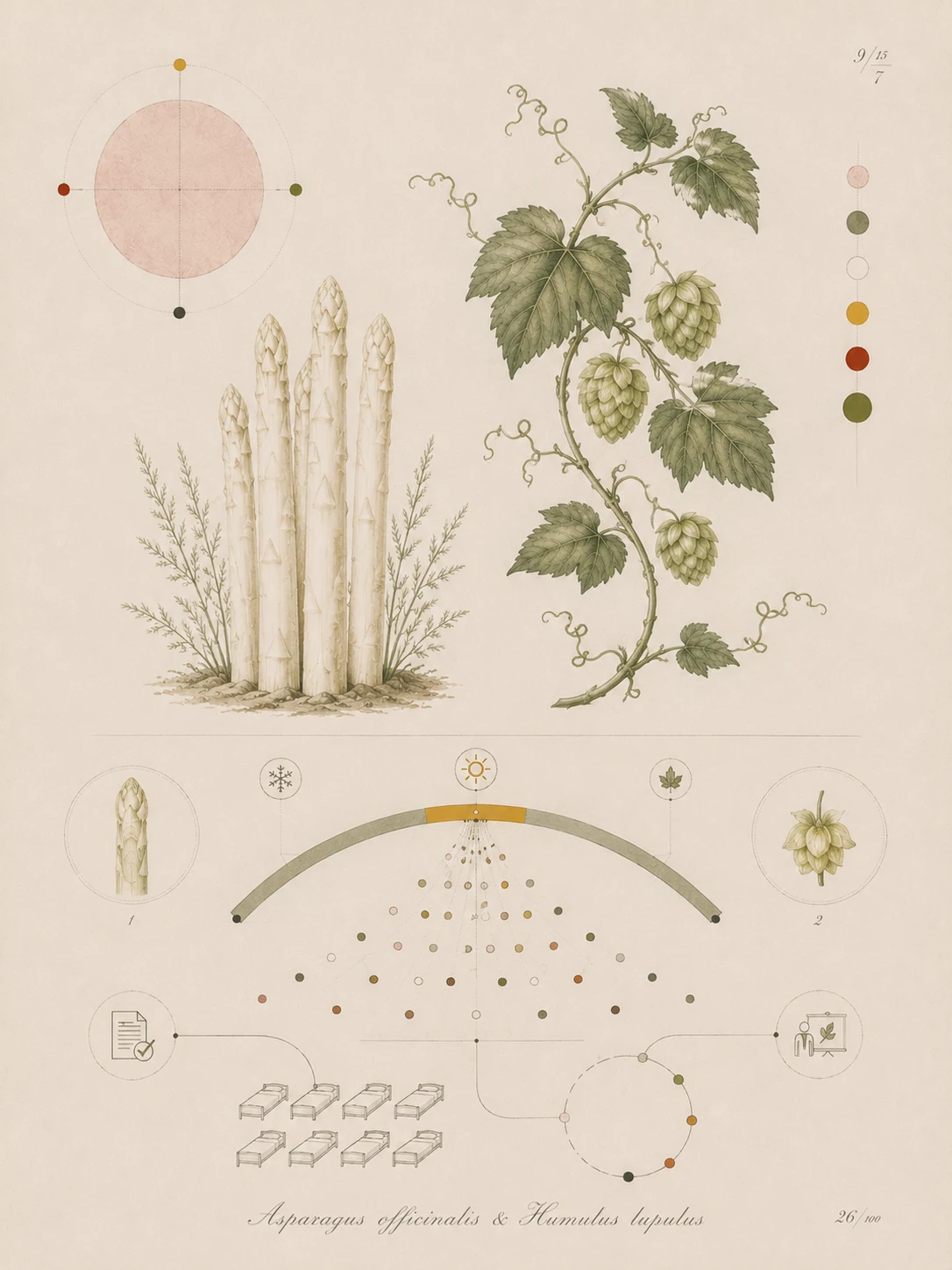
In a 2026 survey of 204 asparagus and strawberry businesses, the VSSE reported that many seasonal workers now stay for only four to eight weeks after reaching their income target. Labor can account for up to 60% of strawberry production costs. The constraint is therefore not only the hourly wage. It can also include recruitment, accommodation, onboarding, experience and the number of productive workers available during a narrow peak.
Mechanization does not automatically remove that system. A Bavarian horticulture research project concluded that hoeing robots are not yet generally economical and still have to be combined with manual hoeing. Automation often moves the remaining labor to quality decisions, preparation and finishing work.
How it changes the product
These sources do not show that every farm has the same labor shortage. Our fieldwork has also found farms with stable teams that return every year.
The useful target is therefore not simply a “labor-intensive crop.” It is a paid peak workflow that is hard to staff, concentrated in time, compatible with a bounded operating environment and not already removed by self-service or standard mechanization.
GroundMind should measure peak workers required, time to productivity for a new worker, saleable output per paid hour and human finishing minutes—not robot speed alone.
This does not make autonomous harvesting the first product. It narrows the next comparison: wholesale versus self-pick, field versus protected cultivation, new versus experienced workers, and picking versus preparation, sorting and crop care.
Paid peak workflow → bounded automation → fewer peak workers → verified saleable output
What comes next
We will test these distinctions in five to eight targeted grower interviews and on-site workflow observations. A workflow becomes a product candidate only when several independent farms can quantify the same bottleneck and at least one is willing to provide a timed observation, operating geometry or concrete trial discussion.
Grow strawberries, raspberries or another specialty crop in Germany? If you can show us one peak-season workflow, we would like to compare the public model with farm reality.
Public sources
Back to index ↑

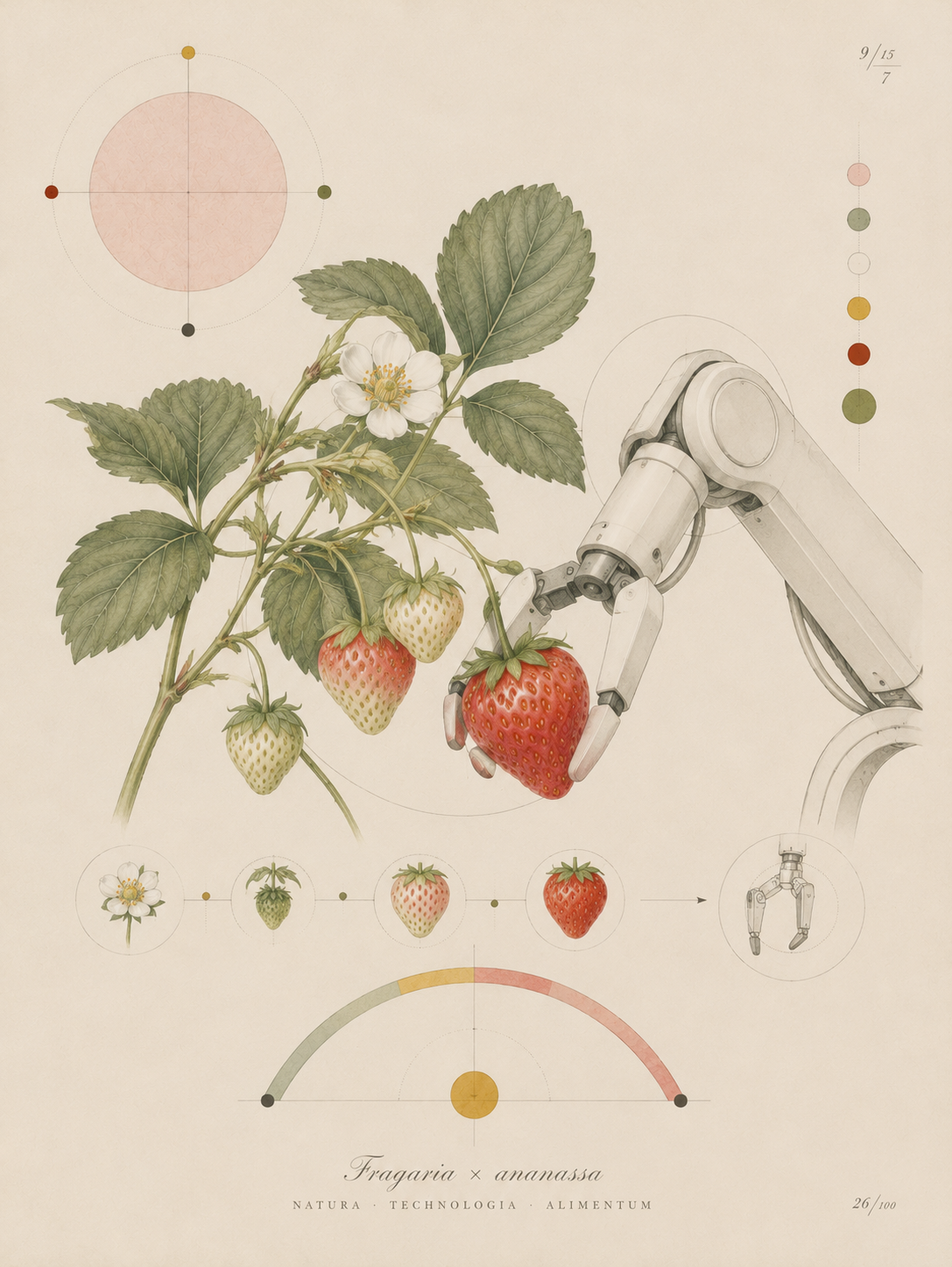 Expert conversation · Concept illustration